

Almost a hundred years ago, W.C. Fields uttered one of the most repeated phrases in show business: “Never work with children or animals.”
Decades later, Nickelodeon decided to greenlight a TV series about children who transform into animals. The result was Animorphs, based on the popular book series by Katherine Applegate and Michael Grant.
Animorphs focused on the lives of five teenagers — Jake, Marco, Cassie, Rachel, and Tobias — who are given the ability to morph into any animal they touch. As Earth is being invaded by a parasitic alien race known as Yeerks, the Animorphs must use their powers to protect mankind while keeping their identities a secret.
The show ran for two seasons on Nickelodeon from September, 1998 to February, 2000. Among the cast were up-and-comers Shawn Ashmore (X-Men, The Rookie), Brooke Nevin (The 4400, Good Trouble), and Paulo Costanzo (Road Trip, Royal Pains).
While the show struggled to adapt its source material due to financial and technological restraints, it had an indelible charm that remains in the mind of 90s kids. Not to mention, the theme song still slaps.
To look back on Animorphs, I spoke with several cast and crew to hear their experiences of making the series. Give it a read below!
Development
In 1998, Scholastic was coming off the heels of a successful four season run with its TV adaptation of R.L. Stine’s Goosebumps. Looking to expand their television repertoire, they decided to set their sights on Animorphs. Originally published in June, 1996, Animorphs sold close to ten million copies during its first year and a half on shelves.
Marc Scott Zicree (writer): My agent had heard that they were looking for someone to develop the first season of the show, and the people at Scholastic flew me out to New York. I met with them and was sent fifteen of the books. I read those all en masse, and then just kind laid out the first season. The idea was that I would write all the outlines and several of the scripts to set the tone. They knew I was very reliable because I had a background in animation and live action science fiction shows with visual effects.
Ron Oliver (director/writer): I was doing Goosebumps at the time. I was basically jumping from show to show. I was also doing a syndicated show for CBS called PSI Factor, and it was sort of an X-Files knockoff. In the same building, we did Goosebumps, Animorphs, PSI Factor, and there was also some hockey show. But the production company — we were doing Goosebumps through Scholastic — they came to me and said, “Hey, do you wanna take a look at some of these books we’ve got? We’re going to make them into a show.” So, I read the books and I thought they were very fun and imaginative and thought they’d be a really great thing to make.
Zicree: When I read the novels, I liked them very much. I thought it was a very original concept, very fun, and [Applegate] really thought it through in terms of what it would be like to be a fly, or what it would be like to be a horse — the different senses and the different musculature. Just the whole sensory experience of it, as well the emotional experience of it.
Brooke Nevin (actress, “Rachel”): The books themselves were so much more symphonic in a way, or epic [compared to the show]. The material was a lot more graphic than what you could portray in a children’s show on Nickelodeon. In the books, they didn’t shy away from some of the grimmer aspects of war and the real psychological and human toll that it takes.
Oliver: I think Scholastic was pretty used to what I was doing with Goosebumps. In the case of those books, there’s always one or two really great ideas in there and then there’s a bunch of stuff that he puts in to scare nine year olds. So you take the good ideas, extrapolate those, and then turn them into the stories. I remember that being the case with the Animorphs books too, but they were actually more character driven storylines than the Goosebumps books. So you had to get into those characters’ heads, and use them and try to understand them. That was a different take.
Zicree: I thought it was a great idea for a series of books and I could see why it was popular, but I had great concerns about how they were going to produce the show because having kids turn into animals was both a visual effects nightmare and a production nightmare. I knew certain things would not be readily translatable because they just didn’t have the budget. It was going to be shot in Canada, it wasn’t the biggest budget show ever. I think it was just before Harry Potter hit big, so Scholastic was having successful series of novels, but not on the scale of Harry Potter, which took things to a whole nother level.
Michael Grant (Animorphs co-author, via Reddit): We told Scholastic we thought it was a bad idea to go ‘live action’ given that animals, child actors and FX are the three most expensive things you can have in Hollywood, short of hiring Tom Cruise. We were loving the very noir Batman animated series at the time and thought we should do something like that. Instead they ignored us…
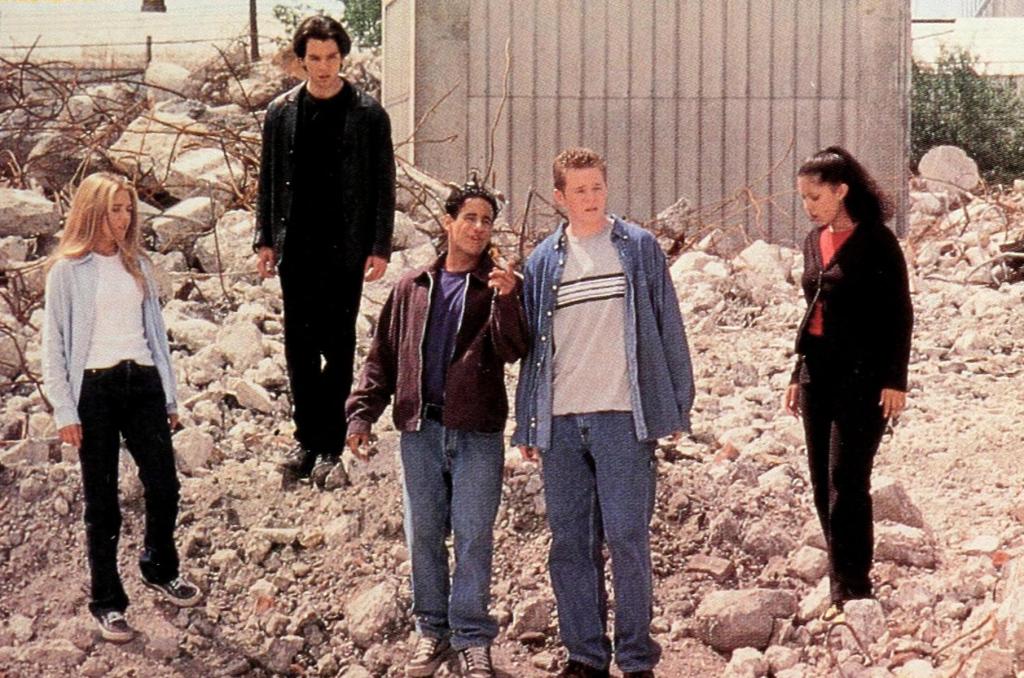
The producers conducted a sweeping search around Toronto to find their five lead actors. Fifteen at the time, Brooke Nevin was fairly green to TV/Film when she landed the role of Rachel.
Nevin: I had just started my acting career. I think I got my first job in a film when I was thirteen, so a lot of the auditioning process in entertainment was still new to me. So when the opportunity came up to audition for a lead in Animorphs, it was a really big deal. Certainly at the time in Toronto, they would have called hundreds and hundreds of kids in to read for these characters. I remember when the audition came in, I was excited, but also super nervous. I definitely picked up a few of the books that centered on Rachel before auditioning.
Joining Nevin from Toronto would be Shawn Ashmore as Jake, Nadia Nascimento as Cassie, and Christopher Ralph as Tobias. However, the casting pool would expand to Los Angeles when producers couldn’t find a fitting candidate to play Marco.
Oliver: Back in the nineties, trying to find actors of any ethnic diversity in Canada was virtually impossible. I remember they did a pretty broad search [for the role of Marco] and there was just nobody who either had the talent or the ethnic diversity.
Nevin: Boris [Cabrera, “Marco”] was from Pacoima, California and he traveled the furthest to join our cast. I would say Boris in some ways was the most like his character out of anyone. He had such a great sense of humor and didn’t take himself seriously. He was always teasing other people in a really good-natured way. He was also the first person who taught me Salsa, so I’ve had a long-lasting and abiding love for Latin partner dancing all because of him.
Shooting
With a promising cast and crew in place, Animorphs leapt into its first season — though not without numerous challenges. CGI was still in a somewhat primitive state, making the morphing sequences costly and time consuming. Additionally, key alien species from the book series, such as Andalites and Hork-Bajir, were difficult to translate on screen by way of practical effects.

Alan Doucette (prop master): The director on the pilot was a man by the name of Timothy Bond. He was a very experienced director who had most famously done an episode of Star Trek: The Next Generation. I loved that show and really looked up to the man, but he could be a very difficult person to deal with. He demanded complete attention to every detail. I think some of the people realized that the decisions he made for that pilot episode reverberated through the rest of the series.
Oliver: I had signed on to do the episode after the pilot. I remember walking into the studio and seeing this ridiculous blue shag carpet thing that was supposed to be the [Andalite]. I was like, “Who okayed this?” A lot of it was the design work. I forget who it was who did the pilot, but whoever it was who signed off on the designs for this stuff, it was like, “No, no. There are other ways to do this.” You can’t damn someone for trying because who knows what parameters they were stuck with, but it was definitely one of those cases where you go, “There’s no way I would have approved this stuff.”
Doucette: For a kids show in the 1990s, I think it actually looked pretty good. When you see the Andalites, you see those blue faces with the weird eyeballs. They couldn’t do much with it, but I know it scared the heck out of some young kids. There’s something about it being dark, a little grainy, and someone putting a lot of time into building an actual face out of rubber that adds a lot of charm to the whole thing.
Nevin: I’m remembering this through the eyes of my fifteen-year-old self. Watching back some of the things now twenty-five years later, it has maybe a different connotation. But I remember going on the set for the Underground for the first time, and how massive it felt to me seeing this whole cavernous underground tunnel system they built. I just remember being so amazed by everything that went into creating that set. It was really my introduction into the magic of moviemaking.
Jill Compton (first assistant director): I think the studio we shot in was the old Molson brewing factory which used to be right in downtown Toronto. I wouldn’t call it a studio so much as an almost condemned building. We literally were one of the last people to shoot in places like that. Everything was being earmarked for destruction or to be turned into a condo. That place was particularly rough, no offense to the producers, because you had bare floors and panels that had been yanked out, so you had to be really careful. It was so long ago, it was a little bit like the wild west in terms of how things were carried out.
Oliver: The Scholastic exec we had on it was great and they were very aware of the budgetary limitations. And it wasn’t so much budgetary limitations, because we had money on that show. I remember doing this whole action sequence where they’re running around and we had sparks flying and explosions. It wasn’t so much budgetary as much as the technical limitations we had.
Doucette: I feel like I should get into the whole morphing thing. Nowadays, you can do morphing on your cell phone with an app for 99 cents, but in 1998 it was kind of pushing the boundaries of what computers could do at the time. It also would have cost thousands of dollars per hour, so they couldn’t use it as often as they would’ve liked to. They had to find creative ways to work around it like using reaction shots and shadows.

On top of technological struggles, the cast and crew also had to contend with the wide array of animals that each episode required. While some animals (like George of the Jungle star, Bongo the lion) had years of film experience, others were less seasoned performers.
Oliver: The hardest part of that show was how much time it took for everything. I wanna say we did a half-hour episode in about six or seven days because normally it was five days for a half-hour for a kids show. We had a little extra time because of the animals. We also tended to do two episodes at the same time, so we’d block shoot. It was quite the challenge trying to get those things done in time.
Zicree: I did hear that once they got into production, they were having a lot of difficulties. A lot of trouble delivering the show, because it was such a huge undertaking. You know they say never work with babies, animals, or on the water. And animals are particularly difficult. Most production shows might have a dog or a horse. This had lots more than that and it’s like, “Well, how the hell would you do that?”
Compton: I actually really enjoyed that part of the job. I’m a real animal lover and I love that kind of zoo/circus chaos. Although, as years have gone on, I really don’t agree with it. Like, I don’t think tigers or children should be in the film industry. That’s my opinion after watching it for thirty-five years so far. But back then, we didn’t really have that awareness. We certainly didn’t harm the animals and we took great pains to schedule around how to shoot them and the environment in which it was shot in to make sure it was always safe for everybody, the animals and the crew. To my knowledge, at least on the days I was there, nobody ever got hurt. There was one incident with the alligator and his handler, but that happened off set.
Oliver: They had a couple of movie animals that we used, but a lot of them didn’t have much experience on film. I don’t believe they were overly trained, let’s put it that way. You certainly can’t train a tiger. They didn’t tell us that until after we finished the shot where Shawn touches the white tiger to get its DNA. We’re in the cage with the tiger and the handler, and we’re like, “It’s a trained tiger, right?” “Well no, it’s wild, you can’t really train a tiger.” There’s no way we could do that now. We’d be sued six ways to Sunday! But back in the nineties, you could get away with a lot more.
Zicree: If you see a lot of movies or TV shows nowadays that have animals in them — tigers or whatever — usually those are CG. They’re not renting a tiger and hoping it won’t kill the actors.
Compton: One time we were transporting Bongo through a residential neighborhood. We had it all locked down, but then this old guy came out of his house to walk his dog while we were just taking Bongo from the trailer on the street into the building for his scene. The dog started barking at Bongo, and Bongo turned around and roared. I don’t know if you’ve ever been in close proximity to a thirteen-hundred pound lion roaring. It just can rip the skin off your face, it’s so loud. That dog just about shit himself! We hustled Bongo inside and got rid of the guy. Luckily he was far enough away that nothing was going to happen, but it was a neat moment!
Nevin: Being that close to such a large cat was rather intimidating. Looking back on it, I’m surprised they let essentially children in the same space as such a large animal. But it was exhilarating. It was really fun to work with animals. You never really know what they’re gonna do next, so you just have to roll with it. I would say out of all the animals, the golden retriever hit his cues the best.
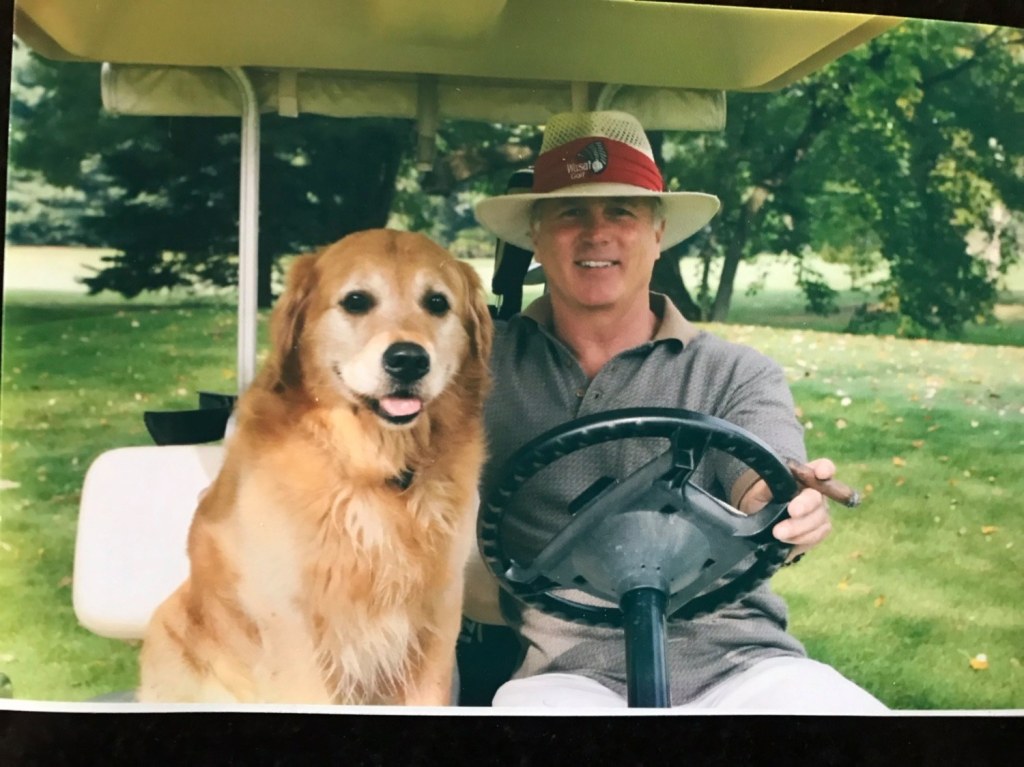
Bryan Renfro (dog trainer): The golden retriever’s name was Jessy. I got him when he was about a year old and trained him specifically to do film work. I’m a stuntman as well as an animal trainer, and me and some other stunt guys were in Mexico playing golf when I got a call from [line producer] Lena Cordina. She called me because I had done a lot of work for her before as an animal trainer and stuntman. She called me and said, “We’re gonna do a new series. I’m gonna need a golden retriever and a cat that will work together.” I said, “I don’t have those right now, but as soon as I get home I’ll get a young golden retriever and a cat, and I’ll train them to work together.” So we made the deal right there in Mexico, and when I came home, I got a year-old golden retriever and picked up a cat at the pound and did the show with them.
Oliver: What I learned from the experience of making that show is animals tend to come to food. They’ll come to the food, and that’s really all you can do. Having an animal run away is almost impossible to get in a shot.
Nevin: I had a lot of scenes where I was talking to “Tobias” and balancing a red-tail hawk on my forearm. I always had a lot of raw chicken cutlets in my pocket when we filmed with the hawk.
Renfro: We had to do a scene one night where four or five of the townspeople were chasing the dog and the cat. The whole scene was running through the forest at night with people chasing the dog and cat with lit torches. I thought, “Oh shit, this is gonna be tough.” Because with dogs, you can routine them into an area where you want them to go, but cats are more difficult. So what I did was I trained the cat to always follow the dog. “Wherever the dog ends up, you will get food.” The cat stayed right behind the dog the whole time and we got the shot.
Legacy
When it came time for a second season of Animorphs, Nickelodeon opted to only order six episodes, a hefty drop from the first season’s count of twenty. The three-part finale “Changes” would air on February 20th, 2000 as a TV movie before the series met its cancellation.
Nevin: When we got picked up for season two, it was such a truncated order. It was just six episodes, so I think we knew it was going to be our final season.
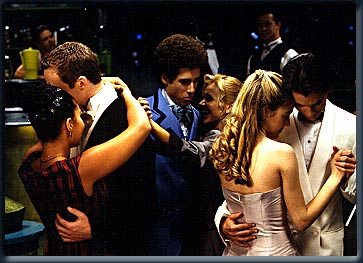
Oliver: We did the trilogy at the end, and I remember I wrote them all as a block. I think we did a final scene at a diner or something where they’re all dancing. The idea was, “Okay, now they’re safe, they know what they are and how to do this. They’ve got it figured out and this is a safe place for them to be.” I wanted that sense of completion there for the audience to at least feel like the story’s been told for the finale. I think the worst thing that can happen when you’re doing a series is leaving things on a cliffhanger that wasn’t supposed to be a cliffhanger.
Nevin: Obviously, I was disappointed [about the show ending]. I had so much fun playing that character and so much fun with my castmates that it was really sad to all of us when it came to an end. But it was also a good lesson in realizing that nothing is predictable in the entertainment business. You just have to take the jobs as they come and make the most out of them.
Oliver: When we shot the last three episodes, I remember we shot in this great, big park in Toronto and we had so much fun. I remember when we wrapped, we were back in the studio down on the waterfront in Toronto, and Boris came into my office, closed the door and burst into tears. He said, “I don’t think I’m ever going to have an experience like this again.” It was really wonderful, sad and lovely. We sat there and cried for ten minutes going, “Yeah, I don’t think we will.”
Twenty-five years on, cast members such as Nevin and Ashmore have maintained steady acting careers, while Cabrera, Nascimento, and Ralph have moved on to different professions. The Animorphs franchise still boasts a passionate fanbase who continue to analyze the books and TV show via online forums and podcasts.
Nevin: I just feel gratitude for the fans that have stuck with us all these years. It’s a testament to the power of the really amazing storytelling that K.A. Applegate and Michael Grant set up in the book series. I am just continually grateful to anyone who started watching the show and continues to be a fan.
Shawn Ashmore (actor, “Jake” via ScreenRant): The longevity of Animorphs is so crazy to me. You know, it was like two seasons when I was a teenager. But, I think at that time, there wasn’t a lot of kind of mature sci-fi in mainstream media, as far as television and films. When I say mature, I just mean aimed towards kids, but not super goofy. Don’t get me wrong, there was some goofy stuff about Animorphs, mostly the effects and the technology at the time. But, these kids were in peril and were fighting for their lives and fighting to save the world. It’s had a really lasting effect. I’m always amazed when people are like, “I knew you from Animorphs.”
Nevin: I think what was really appealing was the camaraderie of the main characters. You had all these kids from different backgrounds with very distinct personalities and senses of humor. Between Jake, Rachel, Cassie, Tobias, Marco, and Ax, there was always a way into that world because no matter what, you could connect to one of the characters.
While numerous plans have been made through the years to reboot Animorphs as a film series, a finished product has yet to materialize.
Zicree: In a way, I’m surprised it hasn’t been developed to fruition in recent times. With the success of Harry Potter and so many other YA novels like The Hunger Games, you’d think they would have seized upon the opportunity and made it, but they haven’t.
Grant (via Reddit): Our biggest regret [about Animorphs] is that we let our idiot agent negotiate the deal. Which is why we know fuck-all about any possible TV/Movie deal. That’s all a sore subject, I’m afraid.
Nevin: There was an announcement that came out a couple of years ago, but I think we would have heard more about it if it was in active development. Not to say that eventually there couldn’t be a reboot of the franchise, but I don’t think there’s anything coming up soon. I think now, with the type of digital technology we have, it would be the right time to do a live action version of the series for sure.
Ashmore (via ScreenRant): I think it’s ripe for a reboot, I think the technology is at a better place. And again, it walks that fine line for YA sci-fi, where it can be fun and it’s young kids. With Stranger Things, Locke & Key, and all these kinds of shows on Netflix where you’re putting these younger kids in these really intense situations, and it’s doing well, like, why not?

 Conventional Relations