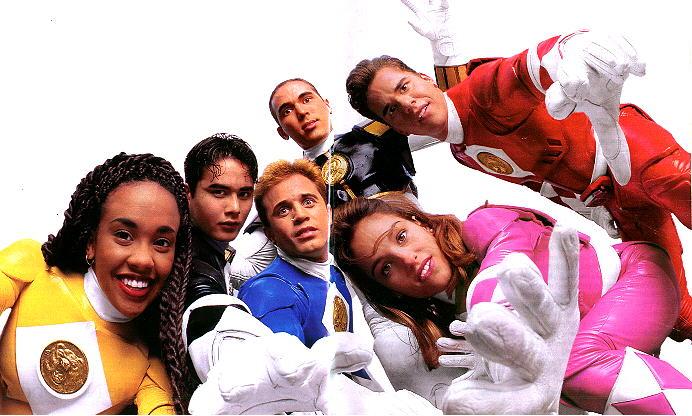
It’s hard to believe that almost thirty years have passed since Mighty Morphin Power Rangers: The Movie hit theaters. Released at the height of Rangermania in 1995, the film took Haim Saban’s neon fever dream of a TV series and heightened it to a new level. From Ivan Ooze’s snarky one-liners to the high-energy action sequences, it has remained etched in the memories of ’90s kids.
But behind the scenes, the journey to the big screen was anything but easy. The production faced many challenges along the way—last minute casting changes, extensive reshoots, and arduous facial prosthetics being among them. Despite that, the cast and crew came together to create not only a fun film, but a trove of lasting memories.
In anticipation of the film’s thirtieth anniversary, we caught up with actors Paul Freeman, Karan Ashley, and Johnny Yong Bosch, writers Arne Olsen and John Kamps, and more to learn about how the film morphed into existence.
So grab your power coin, call your zord, and join us as we look back at the action, chaos, and pure ’90s magic that made Mighty Morphin Power Rangers: The Movie a “morphinominal” ride!
Note: Quotes from director Bryan Spicer are from a 2018 interview with Shout!Takes.
I. Power Transfer
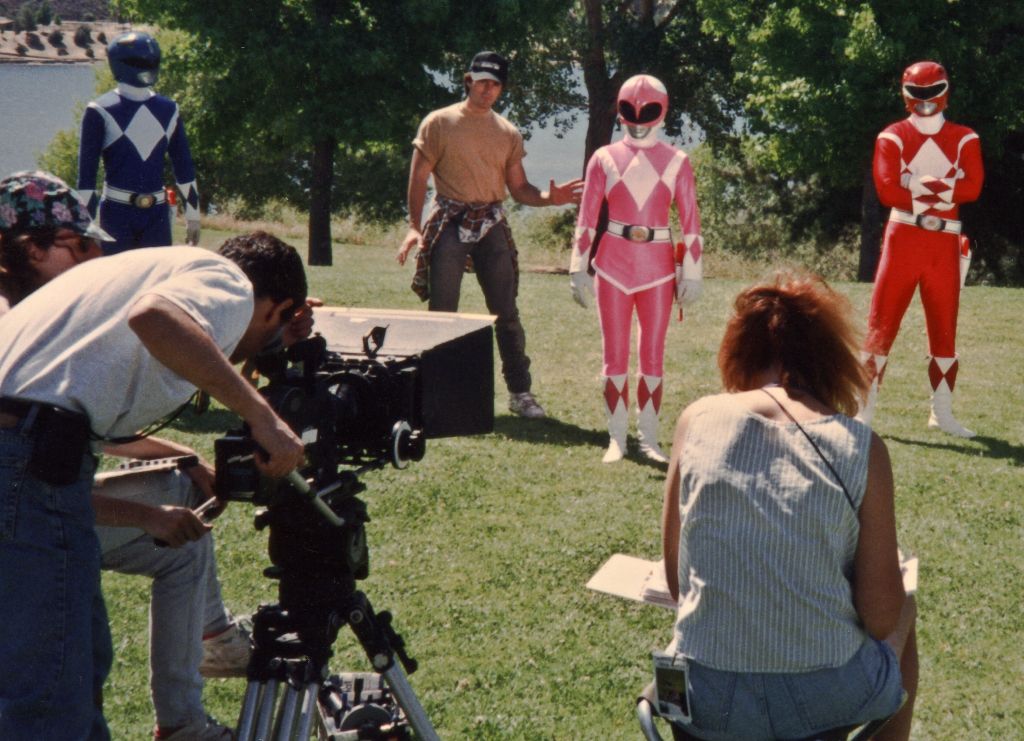
Mighty Morphin’ Power Rangers first aired on August 28th, 1993. Within a year, it became a bonafide phenomenon. From record toy sales to sold-out promotional appearances, the quirky kids’ show cemented its place in the pop culture zeitgeist.
Jeff Pruitt (stunt coordinator): During the second season, the show really took off. I remember the toys were selling like hotcakes, and Saban was putting the Power Ranger brand on just about anything, from soup to this and that. We were working five days a week, just nonstop, so we didn’t realize how popular it was until we had a live event. All of a sudden we would see huge crowds of kids and their parents. We thought, “Wow, this is really taking off.”
The natural next step was bringing the show to the big screen. Saban quickly secured a deal with 20th Century Fox and began pre-production on a feature film. However, not all was paradise behind the scenes.
Pruitt: During the first season, I found out how much the actors were actually making. And they were making less for an entire week of shooting than a bit part actor would make in a single day. So I thought, okay, maybe if I can get this show going and it gets picked up, we can talk about doing a low budget SAG deal. And they told me, “Yeah, just go out there, do a good job, and we’ll see.”
But then the show became a tremendous hit, bigger than anybody ever thought. I went back and said, “Can we get those actors their SAG cards and get this going?” And they said, “Jeff, you don’t understand. The show is not making money. It just looks like it’s making money.” I had a Wall Street Journal, and I took it into the producer’s office. It had a picture of Saban in it and it said, “Power Rangers makes him $1 billion in twelve months.” They just said, “Jeff, it’s complicated.” So then things were getting kind of tense.
In an attempt to improve working conditions, three cast members (Austin St. John, Walter Jones, and Thuy Trang) went on strike, which resulted in them being let go by Saban. Scrambling to find replacements, the producers conducted a nationwide casting search. Out of thousands who tried out, Steve Cardenas, Karan Ashley, and Johnny Yong Bosch were selected from Dallas, Texas.
Karan Ashley (“Aisha/Yellow Ranger”): When we first auditioned for the show, we thought we were joining the cast [rather than replacing somebody]. They didn’t give us much information other than we would be a full-time member of the cast. The minute we got the part, they were like, “You’re gonna be one of the Rangers. Three of them have left.” So they said, “You’re gonna start work on Monday. We’re gonna have your parents FedEx your clothes, and then in about six weeks you’re leaving to go shoot the movie in Australia.”
Johnny Yong Bosch (“Adam/Black Ranger”): It was all kind of a whirlwind. We had a few episodes under our belts and they told us, “Hey, by the way, there’s a movie.” I was like, wait, what? I had just wrapped my head around being on this wildly popular series, and suddenly we’re doing this big-budget feature film? In Australia?! I didn’t know what I was doing half the time, just trying to keep up and get to the next fight scene.
Ashley: They had just started prepping for the movie, which meant we would work during the week, and then on Saturday we’d have to go to fittings or do something related to the movie. And because it was going to be shot in Australia, they were racing to get us passports and visas. It was absolutely insane.
II. Script Derby
In the midst of the behind-the-scenes turmoil, Fox and Saban had begun scouting screenwriters to adapt the show into a feature film. The process, like most aspects of Power Rangers, turned out to be quite unorthodox.
Arne Olsen (writer): Basically what they did is they had nine writers come in and pitch to Haim Saban and Shuki Levy, who were running the TV series and executive producers on the film. It was them and the producer, Suzanne Todd, and Chris Meledandri, who was with 20th Century Fox. It was like ten different people in a room and you had fifteen to twenty minutes to come in and do your spiel. After that, it was sort of an unusual situation. They picked three writers to write three scripts, and I was one of the ones that they picked.
John Kamps (writer): They were so anxious to get the movie done quickly. They hired three writers. There were three of us and we were basically in a script derby. So we all had two weeks to write a feature length script and they were gonna pick the one they liked best.
Olsen: I handed in my script, and then it was sort of radio silence. Then I found out that my script had not been chosen which was crushing.
Kamps: At the end of those two weeks, they didn’t like any of the scripts, but they thought I best captured the voice of what they were hoping to do. So they gave me another two weeks to write a completely different script.
Olsen: Another three or four months went by. I got a call and they said, “Look, what we did was we put your script and this other guy, John Kamps’ script together. John Kamps has been writing it, but we’re not really liking the way it’s going right now.” By this time they’d hired a director and had a start date. So I basically did massive rewrites over the course of a month.
Olsen ended up receiving full credit for writing the screenplay, while Kamps was given a “story by” credit.
Olsen: My whole take was doing a space adventure. Of course, the TV series is in the town [Angel Grove], and so how do you differ this from the TV series? The obvious choice to me was that we get out. That was the sort of one-liner that none of the other nine people had pitched. I also upped the stakes by having Zordon be put in a situation where he’s powerless, and the Rangers are powerless. It’s like the stakes are as dire as they can possibly be. So they liked that aspect of it. The big thing they liked about John Kamps’ script was that he actually created the character of Ivan Ooze.
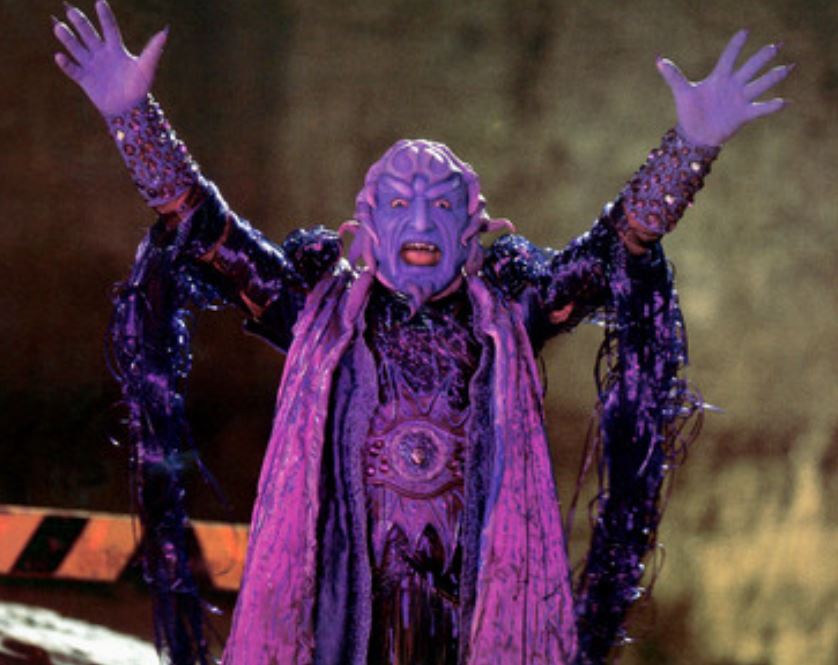
Kamps: In my first script, the villain was called Sam Hammerhead. He was like a Hammerhead shark sort of looking guy. With Ivan Ooze, I probably just thought of how kids played with Silly Putty and it was born out of that.
Olsen: It was the name Ivan Ooze and it had a little bit of the flavor, but what I brought to it was creating a much more comedic character. He was a bit more serious in the earlier scripts, and it was just a great opportunity because the Power Rangers themselves are pretty straightforward. They could have some fun lines, but they are heroic. So there was a lot of room for having fun with big comedy, big lines, and that kind of stuff with the antagonist.
Paul Freeman (“Ivan Ooze”): The original script was pretty wild. There was a lot more shapeshifting involved with Ivan. I remember at one point, he became a black character. At another point, he became a woman. So, for me, it felt like a role where I could do practically anything. Any voice, any accent would fit the part. That provided me a lot of freedom.
Steve Wang, who had helmed special effects for films such as Predator and The Monster Squad, was initially attached as director. However, after creative differences arose, the baton would be passed to Parker Lewis Can’t Lose producer Bryan Spicer, who also contributed to the script.
Bryan Spicer (director): Somebody else was working on it before me, and they had developed it, but I think Fox told me they were worried that the script wasn’t getting to where they wanted it. So they hired me to come in and get the script in order. My concept was to take the audience on a journey like The Wizard of Oz. So we’re going to a foreign place where we run across obstacle after obstacle trying to get to our goal. And that’s what we set out to do.
III. Vinyl, Ooze, and Kerosene
Bringing Mighty Morphin’ Power Rangers to the big screen meant upgrading several of the show’s visual components. The first task was the Ranger suits. Rather than the simple spandex of the series, the producers wanted something more akin to armor. Sticks and Stones FX, led by the husband/wife team of Rob Burman and Jennifer McManus, was hired to create the new suits.
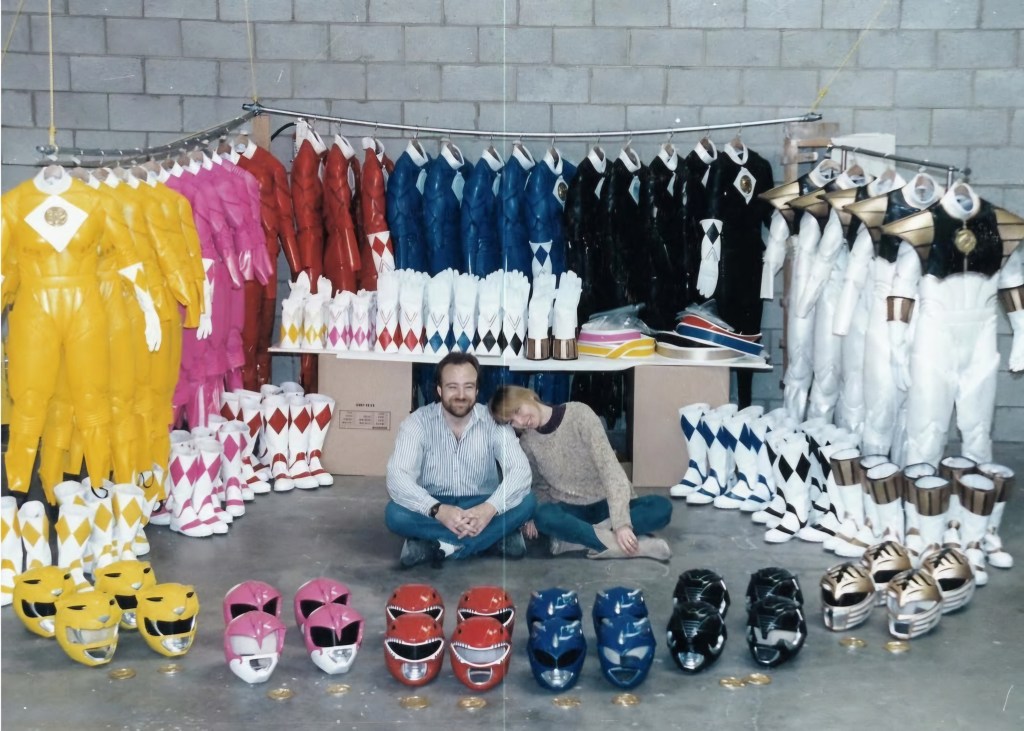
Rob Burman (special effects artist): We had a different director at the time. Steve Wang was directing, and we were given these printouts of things that looked like underwater bubble suits. They were all round and very anime kind of over-the-top things. Steve and I talked about it, and he goes, “My guys can’t move in those suits. Let’s streamline them down.” So basically, he just left it to me, and I came up with the design and made them as thin as we possibly could because they were gonna be pretty heavy.
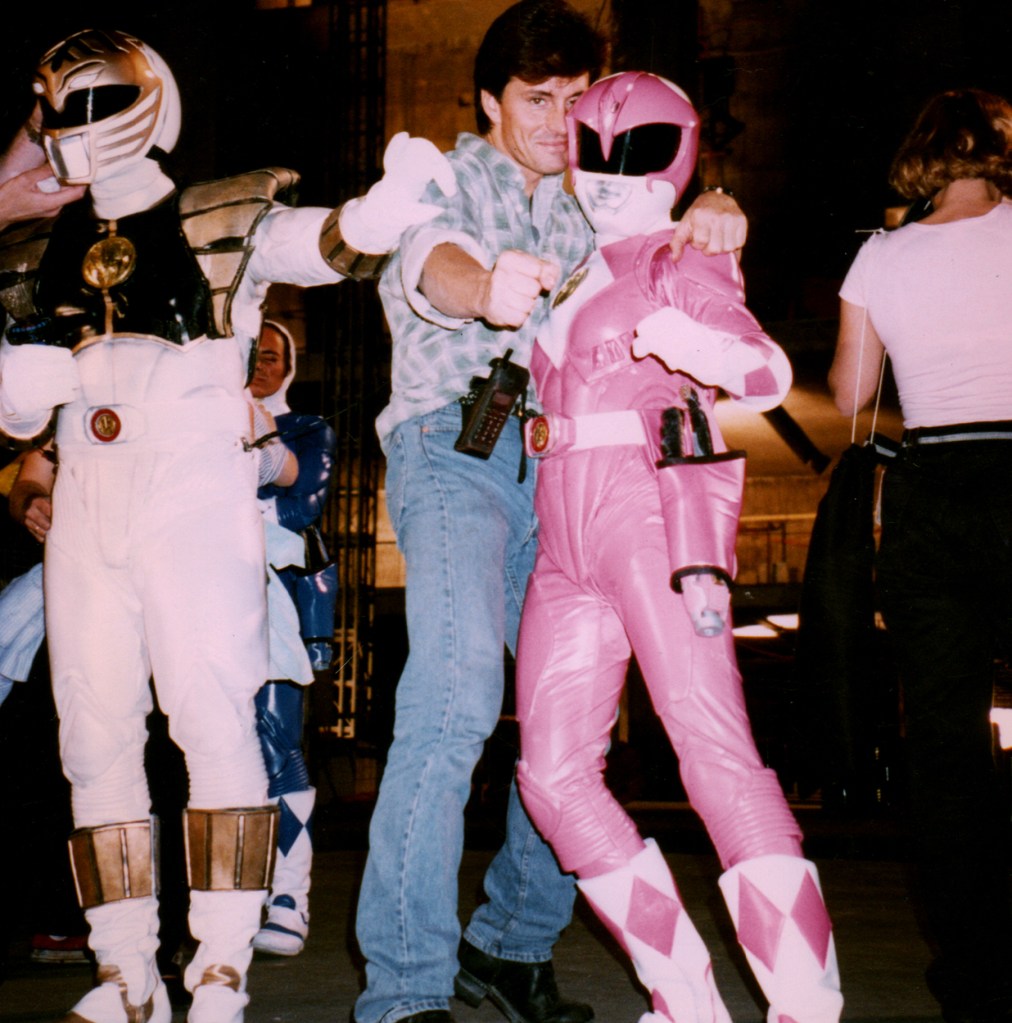
Pruitt: The suits were made out of this tight material. You could not hit above the waist because you couldn’t get your leg up. They were very heavy and tight. So I said to them in pre-production, “We have to have a gusset stretch in the crotch area and under their arms so they can move.” And they went, “Yeah, yeah, yeah. Okay. We’ll take care of that.”.
Jennifer McManus (special effects artist): With the spandex being a double-coated vinyl process, that made it not as flexible. The producers wouldn’t allow me to put gussets or any sort of breathable fabrics into the areas that were necessary. Plus, their bodies were sweating profusely in there. They could get hypothermia just coming out of their suit. But production said, “No. We want it tighter. No wrinkles. It has to be smooth and perfect.”
Burman: Everybody reacted to them a little bit differently. The Pink Ranger came out in her first test suit and said, “I can’t move,” amongst other things. She was used to the spandex suits from the series. But when the Red Ranger came out five minutes later, he said, “I feel great! I’m like a superhero!” And he did a double backflip across my shop.
Pruitt: When I got to Australia, we started trying to shoot and nobody could move. I had to take a little razor and cut these expensive suits in the crotch area and under the arms so they could throw a punch and kick.
While Burman and McManus weren’t present during shooting in Australia, they heard plenty of feedback on their work from producers.
McManus: They took the suits down to Australia. And then they came at us with, “They’re getting rashes,” and all sorts of things. I had to say, “Well, in memo 972, we said this is a possibility, and you said to do it anyway.” We even sent them cleaning instructions for how to maintain the suits, but they ended up wiping them down with turpentine and kerosene.
Burman: They’re like, “Why is the paint coming off?” Well, you’re cleaning with kerosene! What the hell are you thinking? Plus, the vinyl coating on the fabric just melts under kerosene. So all of a sudden, they’re talking about the suits coming apart.
Ashley: The sad part was that the costumes from the movie were supposed to come back with us into season three, but they were so delicate that they couldn’t. There was no way we were gonna get through the work schedule we had with the TV show and be able to wear those costumes. We would destroy them in a month.
In addition to challenges with the Ranger costumes, there proved to be even bigger struggles with the villains.
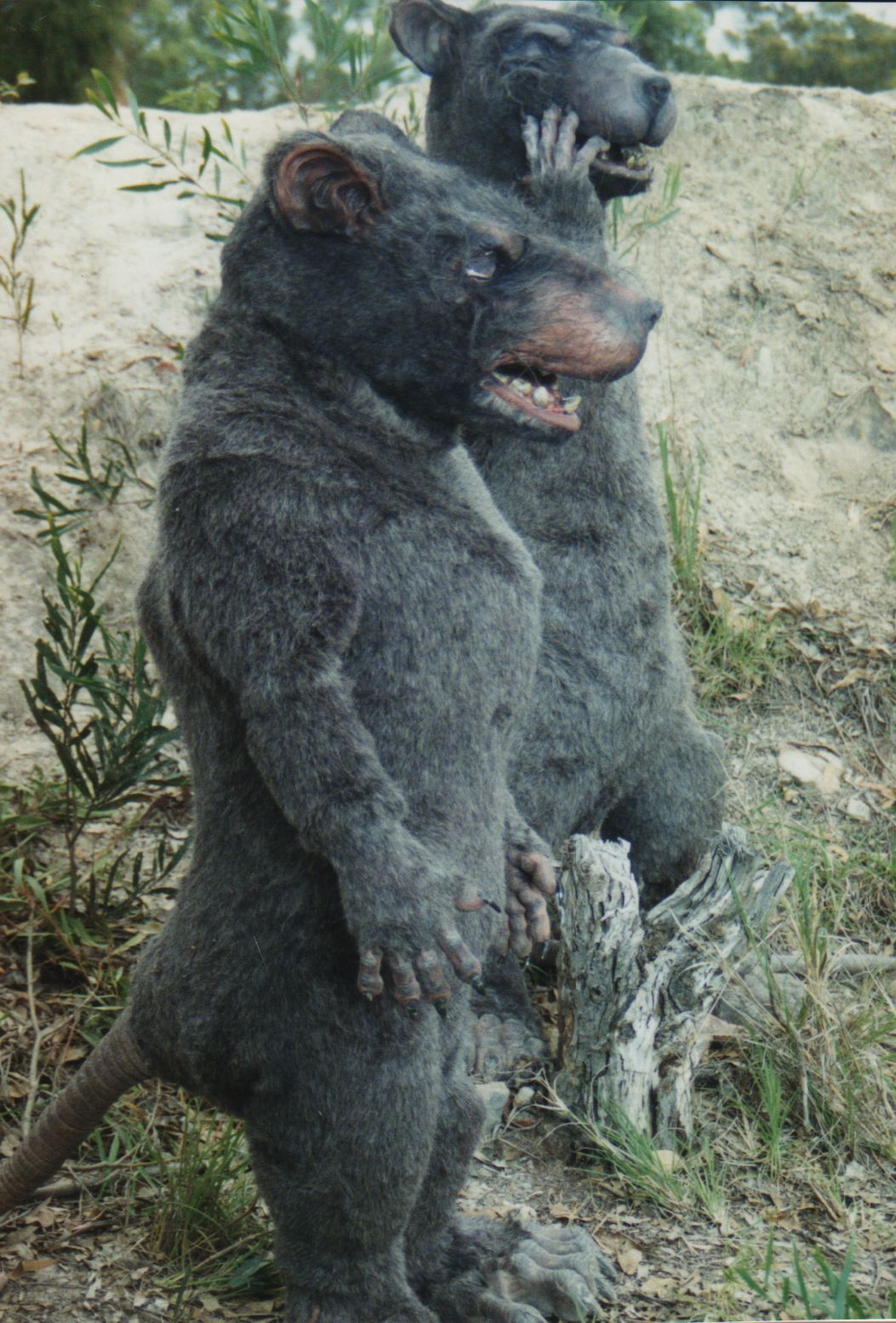
Ashley: I don’t know if you knew this, but originally, when we were fighting Ivan Ooze’s minions, they weren’t Oozemen. They were rats. He was going to have them come out of the sewer, and it was these stuntmen in rat costumes.
Pruitt: They had these big rat suits, and the stuntmen couldn’t see in them. It was like their heads were in the neck of the costume. I shot some test footage with them and we would have to kick them full power in the head so they could feel it and do a reaction. They were totally blind just running out there. So I said, “Let me just design something.” And I designed the Oozemen. They had a contest between the special effects guys and the creature suit designers down there in Australia, and they tried to see who could make the best version of the little sketch that I made. And that’s how they came up with the Oozemen. It turned out perfect.
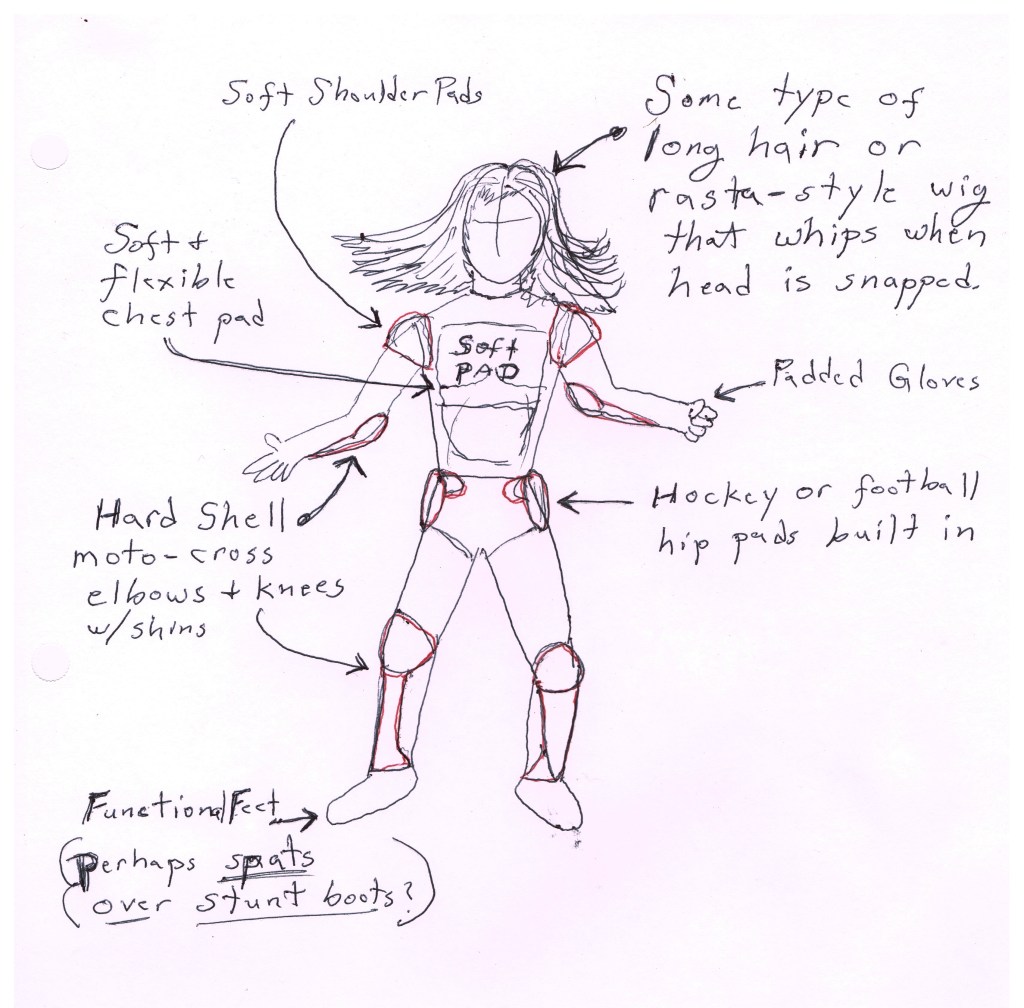
Ashley: I remember one of the producers was like, “It’s gonna cost us $100,000 every time you kick one and it turns into slime.” But it was worth it. It just ended up being a much better sequence.
The biggest costume-related struggle ended up falling on Paul Freeman, who endured a lengthy makeup process to become Ivan Ooze.
Freeman: I think the headpiece had five or six different parts, so the first time we tried it, it took seven and a half hours. After a while, it became much quicker. Well, I say much quicker, but it still took four and a half hours. So that presented some difficulties. It really became a process of meditation—of trying to get my head in a certain place so I didn’t become claustrophobic.
Spicer: We put him through hell. I think as our schedule got deeper into the movie, his skin started getting irritated from all the glues. Our schedule changed a little bit just to accommodate that because he was getting really uncomfortable.
Freeman: Once I was in the costume, I couldn’t sit down. They devised a special chair with a very high back so I could be propped against it. Also, because of the silver false teeth, I couldn’t eat. So when I wasn’t shooting, I was hidden away in the corner trying to relax. I was helped along by a tube of Guinness that I could drink through a long straw.
Spicer: I think his costume was the heaviest. We had him in these big high-heeled boots so that we could make him bigger and taller than everybody. I think I remember him twisting his ankle once and I felt so bad.
Freeman: I had to wear really heavy shoes as part of the costume, and one day I fell through some stairs. They had to take me to the hospital, and since it took an hour and a half to remove the makeup, they thought it would just be easier to leave it on. When we got to the clinic in downtown Sydney, they weren’t able to help me because they didn’t have a working X-ray. So they put me in a wheelchair and rolled me to this other clinic down the street. On the way there, people on the street would point at me and say, “Oh, what happened to that man’s face!?”
IV. Shooting
While filming a major motion picture certainly had its advantages (bigger budget, more elaborate stunts, beautiful Australian scenery, etc.), the process moved at a much different pace than Pruitt and the cast were used to.
Pruitt: With the TV show, it was like a little family. I would talk to my producer, talk to the director, and it was just our little team having fun out there. It’s like when little kids would come to the park sometimes, and I would watch them playing Power Rangers. I thought, well, basically, that’s us over there. We’re those little kids, but we just have a camera. But when we went to the movie, it came with all of the big budget studio pressure. You have these giant egos, giant money, and I had to deal with so much craziness.
Burman: Fox wanted a nice, slick superhero movie. They wanted it to look like Batman, and Saban was like, “No, no, no. The cheesier, the better. That’s what our people like.” So they kind of butted heads.
Pruitt: I had my producers at Saban telling me, “You’ve got to make sure it sticks to our show.” And I was stuck in the middle between the way they were doing it on the movie, and the way we did it on the TV show.
Bosch: The show was shot super fast. Shoot it, move on, no time to overthink anything. The movie was much slower. There were bigger sets, more effects, actual costumes instead of spandex. But it also meant a lot of waiting around, retakes, and a lot more attention to detail.
Pruitt: We had a small amount of money on the TV show, but there was only one cook in the kitchen for the action part, which was me. But not on this movie. It was like fifty people—you don’t know who they are, what’s their position, they’re some kind of producer maybe. They would just show up and start going, “No. I think it would look better this way.” So we did all these extra shots. I would do what I wanted, some other guy would do a couple of shots, and then the executive producer would do his shots. It took a huge amount of time.
Ashley: What was funny is, Johnny’s stunt double [Danny Stallcup] actually broke his leg right before shooting this big sequence. So Johnny had to do all of his own stunts.
Bosch: Danny and I were doing side tucks off the mini tramp and he would get so much height and on one he came down hard and snapped his leg. He still did quite a bit of the stunts, but I sorta took over all the Ninjetti stuff. They basically said, “Well, I guess you’re doing it.” It made me appreciate stunt performers even more by learning what they put up with.
Ashley: I remember some of the other guys were like, “Can I do my stunts too!?” And me and Amy Jo were like, “We’re fine not doing ours. Go ahead.” [laughs]
A big obstacle occurred early on in shooting concerning the character of Dulcea, the ethereal sorceress who grants the Rangers their Ninjetti powers. A number of scenes were shot with Mariska Hargitay (future star of Law & Order: SVU) in the role before production decided to go a different route.
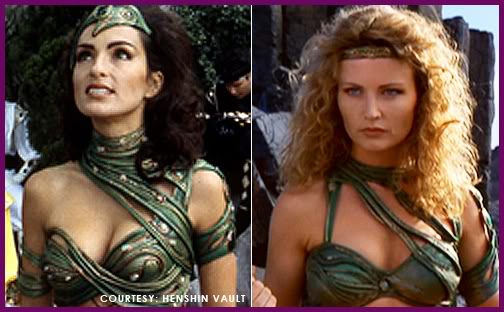
Ashley: Originally, Gabrielle [Fitzpatrick], who plays Dulcea, had gotten the part. That was her role. She went through weeks of rehearsals and training and fight choreography, and she was ready to go. And something happened just randomly where she had a medical emergency and had to have surgery. It was literally a week before shooting and it was down to the wire. So we started shooting the movie and Mariska ended up getting the part.
She worked with us for about one or two months, and I just remember she had no rehearsal. She had no fight training. They just threw her in the deep end. I remember watching her do a scene and people being a little frustrated because her action wasn’t believable.
Olsen: Mariska’s just got this intensity about her, and I think, for that role, we wanted a bit more of a cartoony, She-Ra take on it. When they shot the first days with her, it was evident that the spark wasn’t there. It had nothing to do with her acting chops, it was just her aura was more serious.
Pruitt: When Mariska came down and got in the costume, they were going, “Oh, she’s a little bit too sexy.” They said they wanted her to be a little younger and more of a girly girl than this voluptuous, sexy woman that was standing there.
Ashley: I remember we had a break for Christmas. It was like one week off and we got to go home. When we came back, we started hearing rumblings that Mariska’s not coming back. They had reviewed all the footage and the powers that be had decided she was not the one for this role. And I just remember it being so devastating for her because they just called her and said, “Oh, you’re not coming back.” It was just handled terribly and we all felt horrible.
And so then it went to this phase where they were like, “Oh, we’re looking for Dulcea, and it’s gonna be Tina Turner,” and these other big Hollywood names. We were all just anticipating who Dulcea was going to be. I think they went through those paces and they still couldn’t find the right person. At this point, it had been two or three months, and Gabrielle was fine. She made a full recovery and she got her part back. So we felt bad for Mariska, but we felt so happy for Gabby because that was her part. Gabby was meant for that role and she took all of it so seriously. She did everything to be Dulcea.
As pieces of the movie were reshot, the film’s schedule went several months behind. This would have ramifications on the production of the TV series, leading to a hasty decision to fly out crew members and shoot several episodes in Australia.
Ashley: I think they were optimistic in thinking that we could have shot this movie in three months. Then we shot a huge portion of it, they didn’t like it, and we had to reshoot everything. We ended up being there for six months.
Pruitt: Shuky Levy was down there, and he said, “Well, let’s figure out a way to shoot a couple episodes while we’re standing around waiting for this movie.” So they found locations, they wrote the episodes, and they said, “Let’s take those rat suits, and we’ll use them in the TV show.”
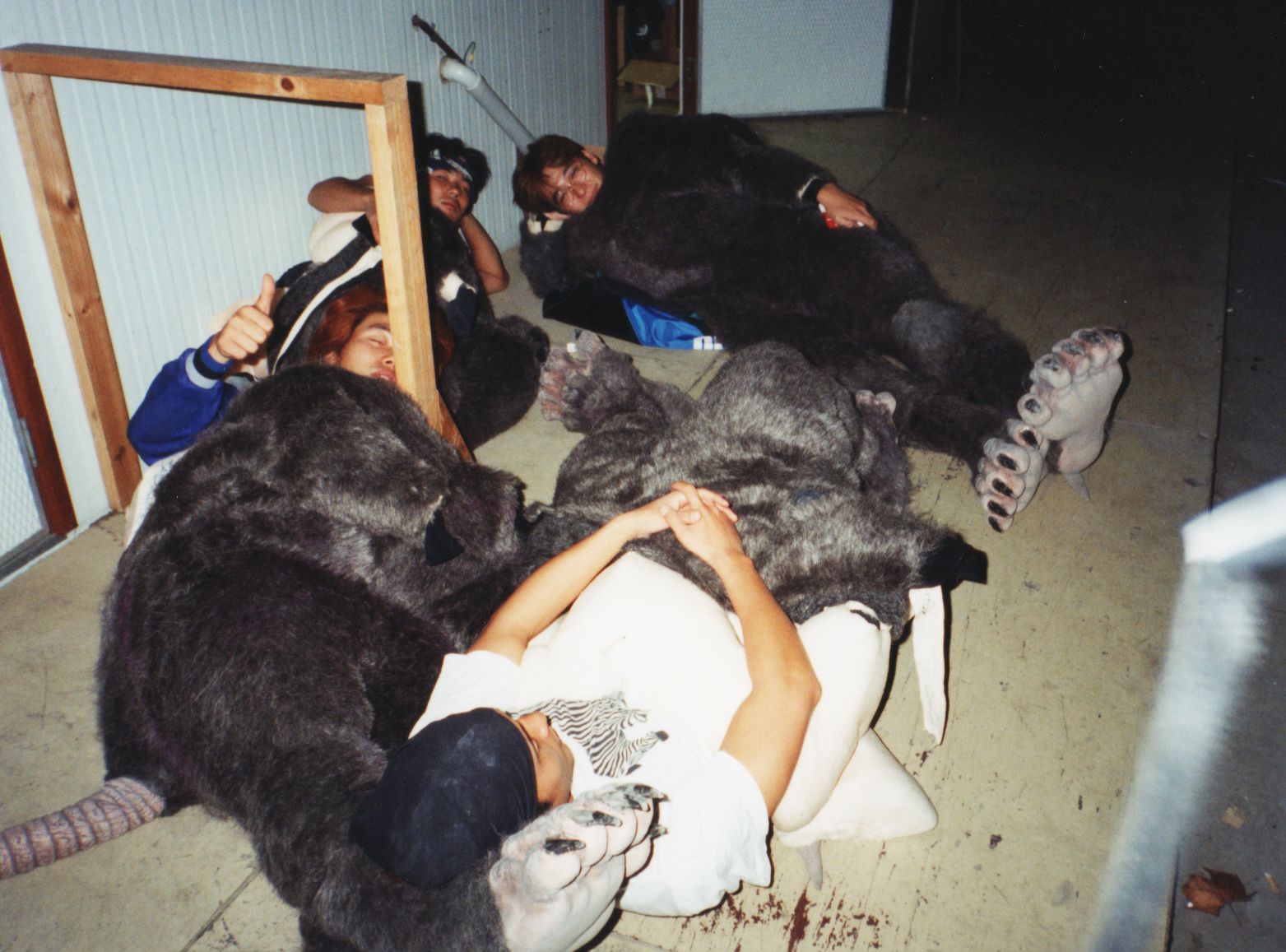
When they weren’t busy working, the actors found time to relax and explore the local Sydney nightlife.
Ashley: It was such a cool city. I love Sydney to this day because of the time that I spent there. You’ve got to remember, not even three months prior to this, I was in high school and living with my parents. When I got the part, I’d only graduated high school maybe one or two months before, and then here I was shooting the TV show in L.A. and going to Australia. And in that country, even though we were eighteen years old, it was legal to drink and go to clubs and gamble. So we would go to the club all the time and dance. We were full adults in Australia.
Bosch: Sydney was awesome. It was my first time really traveling like that. We had some downtime between shoots, and I remember just enjoying the environment and taking in the culture. It was sorta like having constant out of body experiences, realizing you’re doing something you always dreamed of, but at the same time it felt very alone.
Spicer: All the actors were new and fresh, and this was big and exciting for them. I remember some of them being scared. Johnny Bosch was one. You know, we were in a foreign country very, very far away from the United States. I think Johnny got a little homesick, and I remember having to sit down with him and just kind of talk him off the ledge a little bit and say it was gonna be okay.
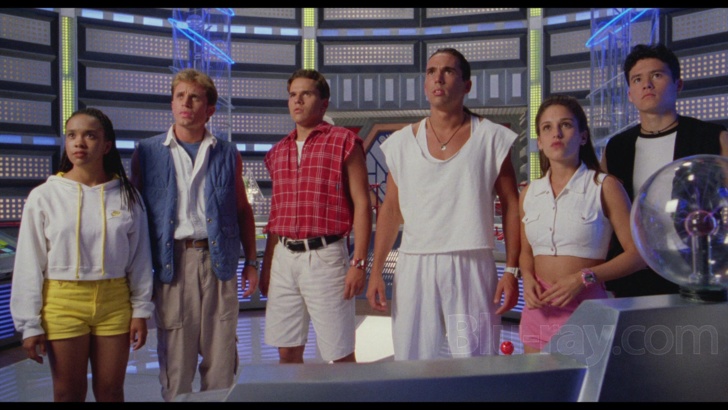
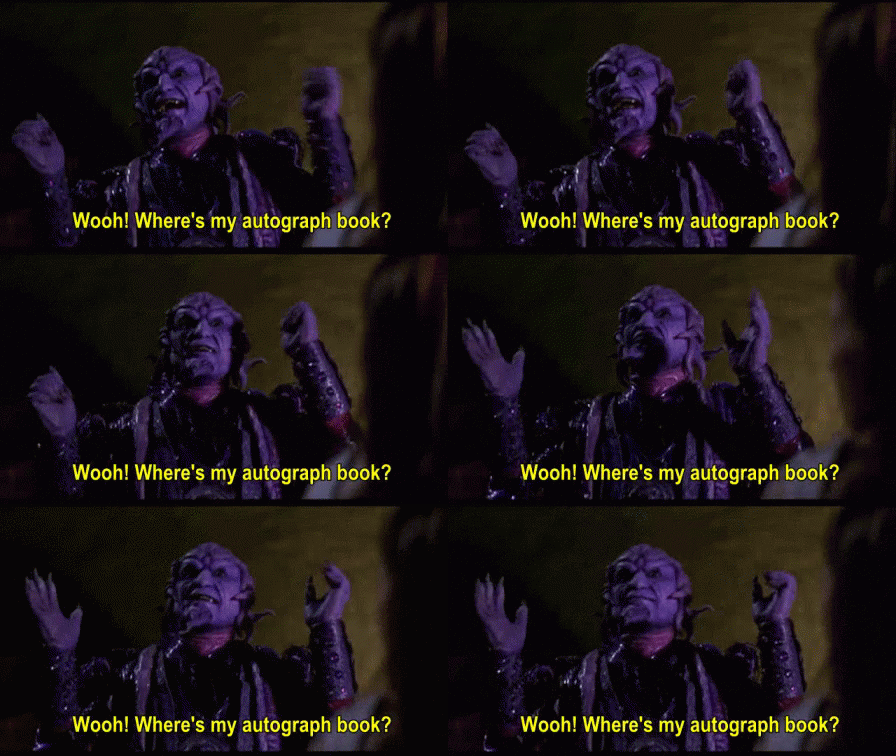
The cast and crew also shared an admiration for Paul Freeman, who treated them as equals and ended up giving an unforgettable performance as Ivan Ooze.
Olsen: Paul Freeman was just fantastic. It was so exciting for me because he had played Belloq in Raiders of the Lost Ark, and that was a big movie from my youth.
Ashley: Paul Freeman is the king. He is literally one of the nicest and most humble men. We were a young cast, and for him to be such an established actor—he’d been on Broadway in the West End in England, and here he is working with us. He would always be so generous. We would run rehearsals and he would be right there, full voice, full character, even in a rehearsal.
Bosch: He had to deal with all that purple goop and prosthetics, and he still gave this awesome, Shakespearean performance. When he was on set, you paid attention. He brought this presence, and he was also really nice. No ego. True professional and great human!
Freeman: Over the years, I’ve become quite close with the cast. There was a twenty year gap where I didn’t see any of them. When we were shooting, we weren’t particularly close in the sense that I was locked into the make-up and costume, and they had such busy shooting schedules. It amazed me because not only were they doing the acting, but they all had to do stunts as well. I was very impressed.
V. Legacy of Power
Despite its many ups and downs during production, Mighty Morphin Power Rangers: The Movie hit theaters on June 30th, 1995. It would gross $66.4 million worldwide, furthering the prominence of the Power Rangers brand. For the actors, doing press for the film and attending the premiere allowed them a taste of Hollywood glamour they hadn’t encountered before.
Ashley: Our first premiere was in The Bahamas. They invited all of the press and gave them a free trip to The Bahamas to come see our movie and review it. And then we did the big premiere in Westwood where we had the red carpet, and it was just this whole thing. I remember getting tickets for my entire family, and they were generous enough to let all of them come. It was just so cool to see the movie and hear people react to it.
Bosch: It was surreal. Red carpet, flashing cameras, someone’s mom pulled me into the crowd and started ripping at my shirt. I wasn’t used to any of that. I think I was more nervous than anything else though. I could barely look at myself in the mirror and now I would see myself on the big screen, to be judged by the world? [laughs] That was wild.
Olsen: I remember Spielberg wasn’t there, but his wife [Kate Capshaw] was there with their kids, so that was a cool thing. There were certain actors there that I got to meet, like Michael Madsen, who’s in a lot of Tarantino movies. He was there with his kid, and getting to meet him was great fun.

When reminiscing on the film, the cast and crew feel proud of their work and view it as a formative learning experience.
Bosch: Looking back, it was a crash course in acting, stunts, dealing with pressure, being alone, growing up, accepting yourself, all of it. I was just a kid figuring it out. But it taught me a lot about work ethic, how to stay ready, stay humble, and keep learning. And honestly, it showed me what I wanted to do with my life. If not for Power Rangers, I don’t know where I’d be or what I’d be doing. I’m really grateful for it and not ashamed to say that.
Olsen: There’s this thing in the movie called Ninjetti. I’m quite into spirituality—not religion per se, but spirituality, and so there’s an aspect of that [in Ninjetti]. You know, the sense of a higher power. Overtly, we’re not going to talk about having a spiritual aspect in Power Rangers, but there was a bit of magic to it, a little sprinkle of that Wizard of Oz touch to it, which for me was the most satisfying thing. The action is fun and special effects are fun, but there was a little more depth to it.
Thirty-two years after the series first aired, Power Rangers still wields a passionate fanbase. Spanning all ages, ethnicities, and genders, it has become a multi-generational cohort that continues to wow those who were a part of the franchise.
Olsen: I’m glad that there are still people that are interested and that it’s culturally relevant. For about five years, I taught screenwriting and a lot of the students that came in grew up on Power Rangers. That, for me, was a really exciting thing. As someone who grew up loving movies, to be in that position of having written something that people grew up with was gratifying.
Pruitt: My wife, Sophia Crawford [Pink Ranger stunt double], and I opened up a coffee shop in Atlanta. In Hollywood, we used to go to coffee shops that would have this thing of putting actors’ headshots on the wall. And I said, you know, we should just put up pictures of stunt people in action. So we put up a bunch of behind-the-scenes shots of Power Rangers. And it’s amazing because you have people who are my age, and you have little kids that weren’t even born back then, but they’ve all seen the original Power Rangers, and they’ll come and just stare at those pictures. It really makes us happy to see that.
Ashley: All of us at some point left the show and we went on with our lives. We worked on other jobs. We acted on different things, and we kind of were away from Power Rangers. And then suddenly, there was demand at conventions from fans wanting to see us. We’ve literally been doing conventions for seventeen-plus years. It’s such a beautiful experience. Most of us, when we left the show… It’s notoriously known that Saban wasn’t the greatest person to work for, so we all kind of left bitter and mad. But I’ve had the opportunity to fall back in love with what we did on the show because of the fans. Now, I see it through your guys’ eyes. I see it as innocent, wonderful, diverse, and ahead of its time. I just am so appreciative of the love we get from our fans. ∎
You can meet Karan Ashley, Johnny Yong Bosch, and more June 13th-15th at Rangerstop and Pop in Atlanta, GA!
 Conventional Relations
thanks, great read
LikeLike