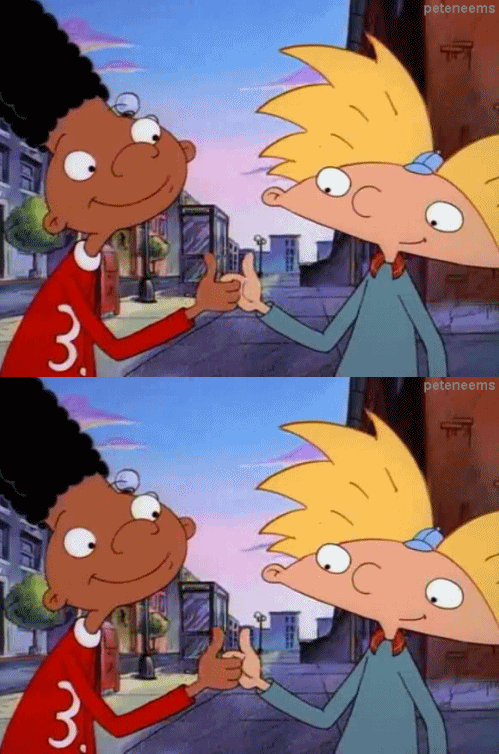
When Nickelodeon began producing original animation in the early ‘90s, they had a specific goal. The previous decade had been saturated by shows that were more interested in selling toys than providing quality storytelling, and the network wanted to reverse the trend.
“On Saturday mornings, boys get G.I. Joe and girls get Barbie. You know, please,” lamented executive Vanessa Coffey to the LA Times in 1991. “There are shows you can give children that are smart, that will appeal to them. Kids like to think. They don’t want to be given guns and sugar.”
While it wasn’t part of the initial wave of Nicktoons, there’s no show that embodied this philosophy more than Hey Arnold.
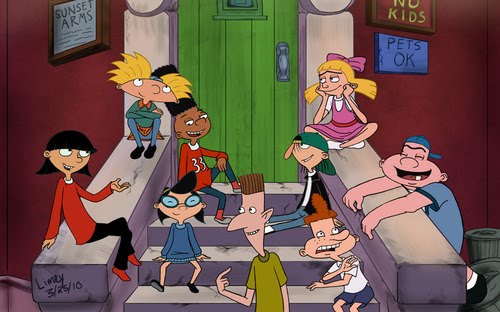
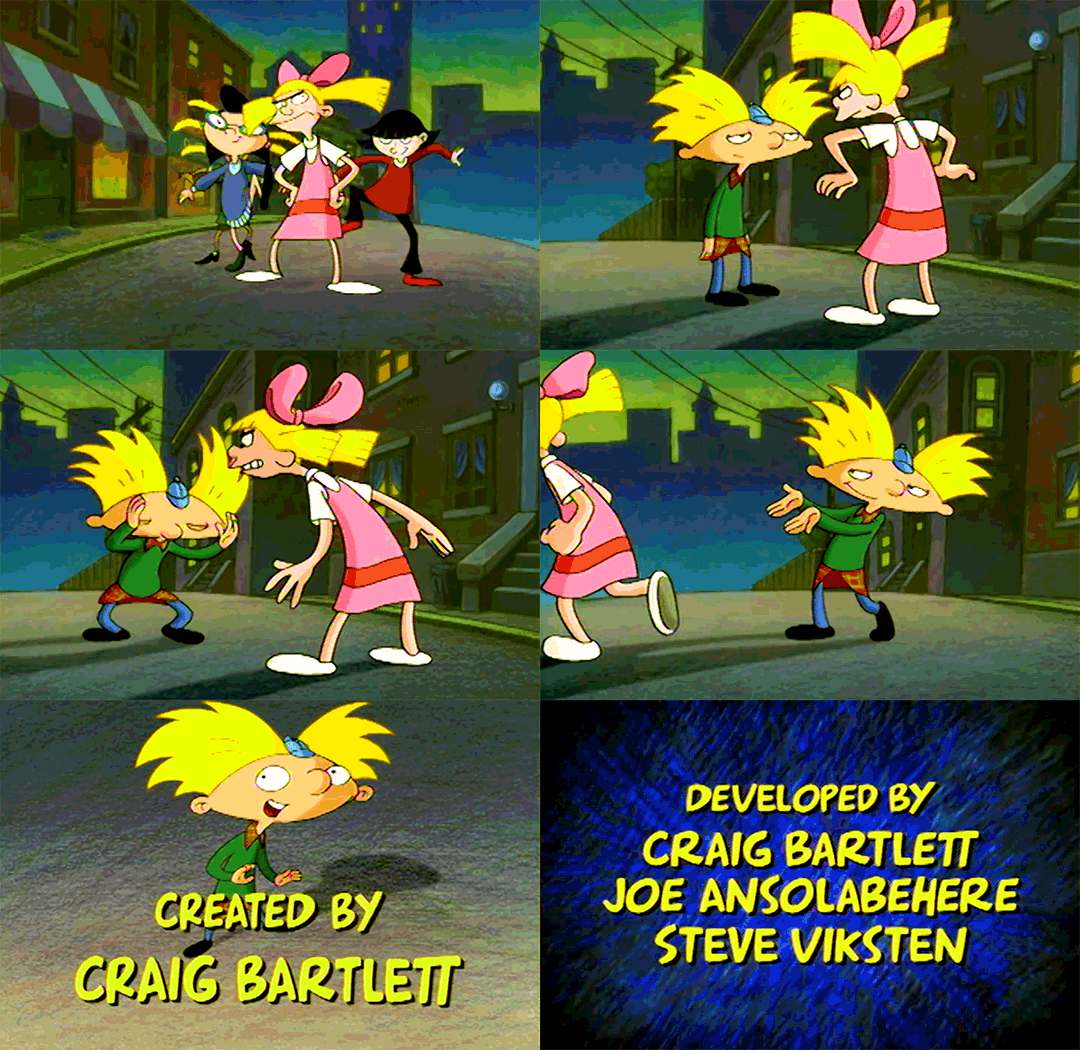
Created by Craig Bartlett, the show focused on Arnold, a nine-year-old boy who lives in a boarding house with his grandparents and eccentric neighbors. Throughout the series, he and his friends navigate life in an inner-city neighborhood, confronting the everyday troubles and triumphs that come with growing up.
There were many things that set Hey Arnold apart from other cartoons: its jazzy score; its gritty urban setting; its ethnically diverse ensemble cast. But most of all, it brought an emotional authenticity to its depiction of childhood. Underneath its offbeat humor were stories about dysfunctional families, grief, loneliness, and bullying. And similar to life, not every story ended with its conflict neatly resolved.
The series ran for five seasons, also spawning a theatrical film, Hey Arnold: The Movie in 2002, and a television film, Hey Arnold: The Jungle Movie in 2017. Over time, it has come to be considered one of Nickelodeon’s most beloved shows, with a dedicated fanbase still discussing it decades later.
For Hey Arnold’s thirtieth anniversary, I spoke to Bartlett and several key figures to discuss the show’s creation and legacy. Give it a read below!
“Wait, who’s this Arnold Guy?”
The legend of Hey Arnold has been passed down from kid generation to kid generation. But where did it all begin?
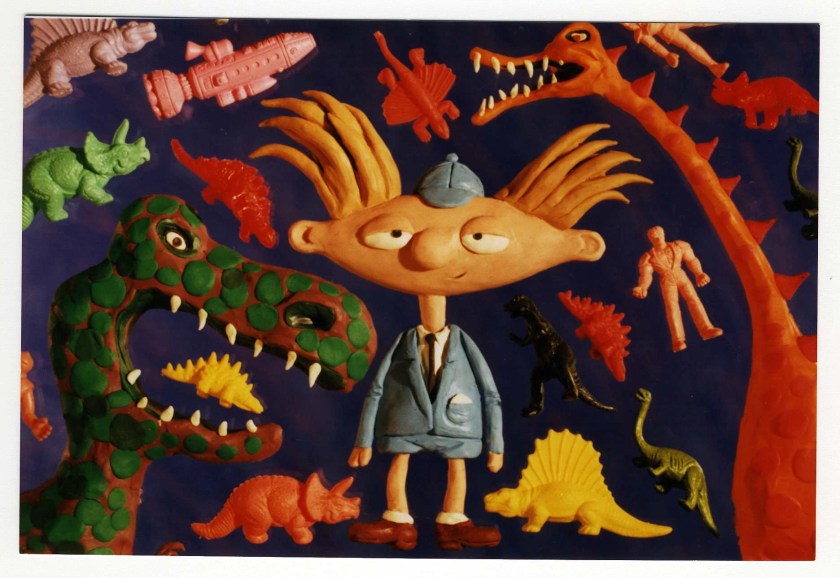
Joe Ansolabehere (writer): Arnold was originally a claymation character. Craig had learned the style because he worked on the Penny cartoons, which were on Pee-wee’s Playhouse.
Craig Bartlett (creator/executive producer): I had been an animator up in Portland for five years before I came down [to Los Angeles] and did Pee-wee. But that work only lasted for a few weeks. So that first summer I was here, the summer of ‘88, I was unemployed. I thought, this is probably my chance to make a little animated short.
The first Arnold short I made was Arnold Escapes from Church with really no more motivation than just needing to make a film that I can take around and show people. And when you think about it, that sounds kind of crazy. You know, you just make a two-minute film and show it to people and they give you a job. But I did, and eventually I showed it to the people at Klasky Csupo.
At the time, Klasky Csupo was a well-established force in the animation industry, having won two Emmys for their work on The Simpsons. Bartlett developed a relationship with the studio which later led to him becoming story editor on Nickelodeon’s Rugrats.
Ansolabehere: Craig is a jack of all trades. He can do everything pretty well. Like, he can pick up a guitar and start playing you a song, and he can pick up a pencil and start drawing new characters. And he can write scripts, but it wasn’t the thing he was trained in at that point.
Bartlett: It was a crazy leap to doing story editing and screenwriting on Rugrats. Before Rugrats, I had not written any screenplays. I just learned on the job. But that was Klasky Csupo’s leap of faith and I really appreciated it. It was one of those jobs that kind of led to everything else.
Bartlett’s Rugrats tenure ended after one season when he was hired to do a World’s Fair film in Spain. Upon returning home in 1993, he and several former collaborators (including Joe Ansolabehere and the late Steve Viksten) were eager to work on a new animated show.
Bartlett: Mary Harrington [former Nick animation VP] got the job to set up a new Nickelodeon studio in Burbank. And all of us were like, “We should go pitch to Mary!” It was me, Joe, Steve, Paul Germain [Rugrats co-creator], Peter Gaffney, and Jon Greenberg [Rugrats writers].
Ansolabehere: We walked in to see Mary with all these ideas for shows. We went through all our ideas and showed her all our artwork.
Bartlett: The six of us had come up with about three or four ideas, but it was evident pretty quickly that they weren’t what she was looking for. So we were sitting there with nothing left to pitch. Someone in the room said, “Hey, Craig, show Mary your Penny cartoons!” I had a briefcase with my VHS sample reel, and it had the Penny cartoons on it, but on the front of it was Arnold Escapes from Church. And that was the first thing that popped up.
Ansolabehere: Mary saw it and she immediately just said, “Can you guys please leave the room? I want to make a deal with Craig.” She fell in love with that image of Arnold.
Bartlett: She was really into it and said, “Wait, who’s this Arnold guy?” And I said, “Oh, I don’t know. It’s just something I created.” And she’s like, “Wow, I want to see more of this.” I came back probably in a week or so and showed her the very first drawings of what Hey Arnold could be. I think at the end of ‘93 and the beginning of ‘94, Steve, Joe and I wrote the pilot and we made it in the spring of ‘94. So all in all, it was an incredibly fast development. By January ‘95, we started production with the first order of twenty episodes.
“This show is about James Brown and Miles Davis”
With production underway, Bartlett, along with Ansolabehere and Viksten, began assembling a writing staff that could execute the show’s mix of humor and melancholy. Those hired would be a mix of former Rugrats collaborators and new voices.
Bartlett: Every writer that we interviewed to hire, we would ask them to come in and pitch a few stories, and that would usually show if they could do something Arnold-y. Joe Purdy came in and his first pitch was “Pigeon Man.” And “Pigeon Man” is so beloved. It could possibly be the most loved episode of the show.
Joe Purdy (writer): I lived in Hoboken, New Jersey for a while, which was a small town where the movie On the Waterfront was filmed. And famously, Marlon Brando’s character kept pigeons on the roof. So here was an interesting neighborhood character that could befriend Arnold, and Arnold could try to understand him.
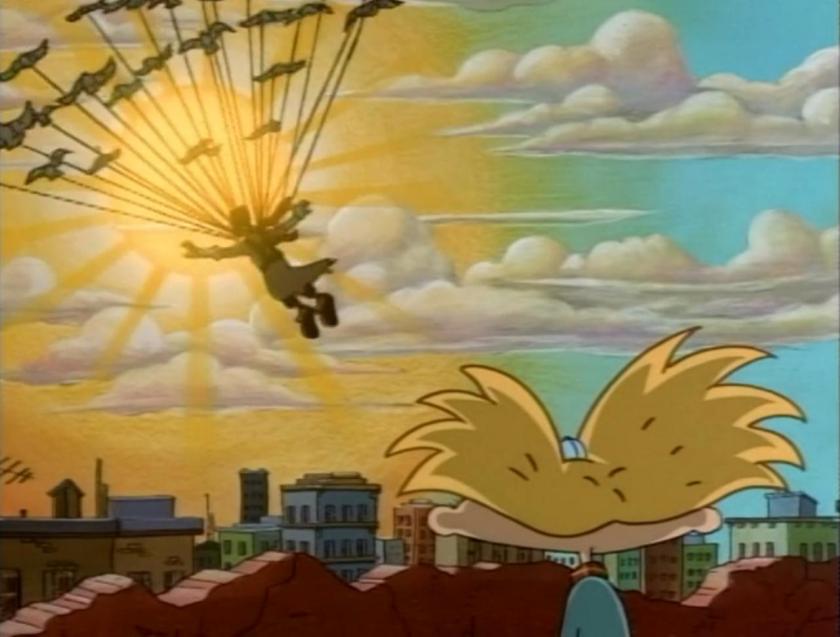
Bartlett: We did a lot of stories about adult weirdos, and Pigeon Man was like our greatest adult weirdo. His complete lack of love for humanity, his feeling of, “I understand these birds. It’s humans I don’t understand.” I think that was a great thing for a kid to chew on. Like, wow, you could grow up and want to isolate yourself so badly. You just want to hook up your pigeons and fly away and go live somewhere else.
Ansolebehere: When we really got down to making the show, Craig was saying, “Look, this show is about James Brown and Miles Davis.” And I was like, “That is the strangest combo.” Craig said, “It’s about the blues, man. There’s a sadness to it, but there’s also a beauty to it and I want to make sure we have that.”
Rachel Lipman (writer): We talked a lot about how these kids were only nine, but they could have very adult feelings–the idea that you can respect the deep feelings that you have in childhood and how intense they are and how meaningful they seem.
Jim Lang (composer): Arnold’s got a loving environment to live in, but a lot of the adults in Arnold’s world don’t act like adults. They’re doing foolish, childish things. I think that’s one of the things about the show that had a lot of impact. It sort of mirrored the lived experience of a kid trying to figure out why adults are so crazy and why they do the things that they do. And in some cases, why aren’t they more loving?
Bartlett: The main kind of touchstone for me was to show that you could be sad, even when you’re feeling guilty about it. Like, “Shouldn’t I feel good?” and you feel sad anyway. And entertainment, things that we love, can make us feel better even though they’re about something sad. I would compare it to, say, Elliott Smith’s music. That would be a good example of something that’s deeply sad, yet it’s somehow comforting and it makes you feel better.
One crucial element of establishing the show’s mood was Jim Lang’s score. Ranging from jazz to opera, each episode required its own unique musical palette.
Lang: Craig and I had both been listening to KCRW, one of the NPR stations in LA which has always had adventurous musical content. There was a DJ named Jason Bentley, who was playing a lot of acid jazz at that point. The kind of urban quality of that music was something that really appealed to us. The other thing we talked about a lot was really liking melody, and we both liked Vince Guaraldi’s Peanuts scores. That was another touchpoint that came up between us.
Bartlett: Lang and I have done a ton of work together through the years, and we’re most fond of the stuff we did on Arnold because it was so all over the place. We could do action-adventure, we could do mystery, drama, horror.
Purdy: We did big band music, we did country music. I was actually driving to work one day and I came up with this ridiculous song, “I Saw Your Face and Wow.” Jim was like, “Great, let’s do it! We’re doing a pop song, man.”
Lang: People talk about the score being jazzy, and there’s definitely some jazzy stuff in the score, but there’s also just about everything else you can imagine. One of the things that I absolutely loved about that show is that there were really on-the-nose emotional moments for all the characters. In the course of a single episode, you go from the goofiest, Three Stooges humor to really emotional moments that needed to be scored tastefully.
Bartlett: When I look at Hey Arnold, I can’t picture it without Jim’s music.
“How hard can it be?”
In cartoons, child characters are usually played by adult women. Hey Arnold took a different route, opting instead to cast real kids. While this caused occasional difficulties (namely actors’ voices dropping and having to be recast), it added an extra layer of realism to the performances.
Bartlett: I thought, how hard can it be? Let’s cast it with real kids, and children who watch the show will sense the authenticity and they’ll like it more. We had some women come in, but as soon as we heard actors like Jamil [Walker Smith, “Gerald”] and Franny [Marie Smith, “Helga”], it was like, case closed.
Justin Shenkarow (voice of Harold): I was about twelve when I auditioned. I got called in by my agent to meet with Craig, and I remember going to Burbank to the audition studio. He handed me a one-pager, which had a picture of Harold and five or six lines underneath. I went into the booth and I immediately thought about my middle school bully–I actually had a girl bully, and girl bullies are scarier than boy bullies. So I lowered my voice down and thought about her and the kind of toughness and the covering up of insecurity you would feel as a bully.
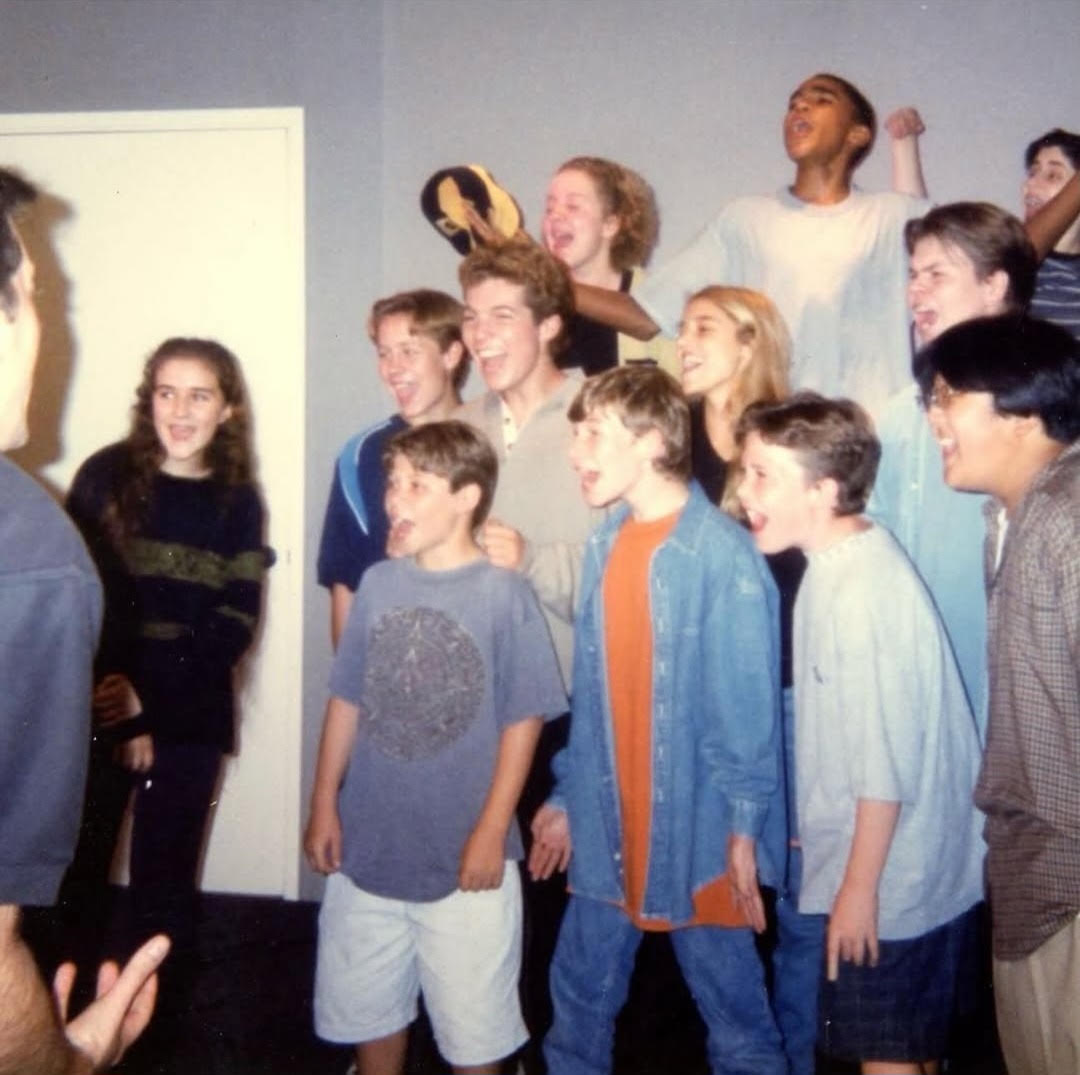
Lang: I think we had four or five Arnolds. A couple of the characters had to be recast because they were boys, and as they got older their voices changed. Somehow we managed to skate with Jamil, whose voice had fully changed by the end of the show. We did an episode where his voice was starting to change [“Gerald’s Tonsils”], trying to sugarcoat the fact. As an actor, he was just irreplaceable. So much of that character came from who he was as an actor.
Ansolabehere: To me the most important relationship, maybe even more than Arnold and Helga, was Arnold and Gerald. Someone like Arnold could have easily fallen into outsiderness. He could have been the guy who sits over in the corner blowing stuff up, but he’s not. And part of the reason he’s not is that he has this friend who loves him.
Shenkarow: The recording process for the show was really unique. For a lot of cartoons, you go into the booth by yourself, you work with the booth director, and in thirty minutes you’re gone. Hey Arnold was special because they would bring all of us kids in together. We would show up to the studio in Burbank after school and we would get in this big room and read the script from top to bottom.
Ansolabehere: That actually came from Paul Germain on Rugrats. He believed that the actors would feed off each other’s energy in a room. So we did that on Rugrats and took that belief on to Hey Arnold. Nobody wants to do it that way, because it’s harder to schedule. It goes faster if you do it the other way. But if you do it that way, you don’t have any acting happening, really. I mean, you have acting, but it’s acting in a void.
Shenkarow: Craig had a specific vision, but he also allowed us to bring our own notes and ideas to the characters. There are many writers and creators who would not allow that and be like, “No, you’ve got to follow the script.” But he allowed us a lot of freedom. One of my famous lines, “Madam Fortress Mommy!”, I just improvised. I don’t know where it came from, I don’t know what it means, but it’s a big part of the Hey Arnold lore, and Craig allowed me to do that.
“The first Christmas show that ever cut to Vietnam”
During its first season, Hey Arnold experienced occasional clashes with network executives over the show’s creative direction.
Purdy: There were certain executives that were there at the beginning who gave a lot of pushback because they were trying to mold the show the way they saw it. There was pushback on story. There was definitely pushback on tone. So there were compromises.
Ansolabehere: Nickelodeon hired this guy to give us notes named Vince Calandra. He wasn’t a bad guy, but he sort of became the enemy of everybody.
Bartlett: In season one, Vince Calandra was the story editor for Nickelodeon, and Vince could be really tough. He’d kick back stories all the time to the point where our core group of writers were like, “I don’t want to come back for another season if we’re working with that guy.” And so they actually put me in a position where I had to fire Vince off the show. That was a rough day, but there were things like that where you had to go to the brink on something. Part of my job as the creator was to go to bat on behalf of somebody who couldn’t. It was all about, “What’s going to make the show survive?”
Purdy: There was as much discussion about the actual story and content as there was about the strategy to react to the executives’ notes. And everyone had very definite thoughts. Sometimes there were passionate arguments about story points, which I always stepped back and looked at the bigger picture. I was always very involved, but it was amusing. Like, god damn, you guys are ready to have a fist fight over a story point in this kids cartoon.
Lipman: There’s always a negotiation, but we all, the network included, we weren’t on two sides of a battle. It was more like, if you’re not allowed to tell it, why not, and is there a way you can tell it? Why do you feel it’s so important to tell this story and what’s it going to do for the show? And I think everybody just had the show’s best interests at heart.
Purdy: There was also definitely discussion about how far we can push things. We dealt with alcohol, we dealt with addiction. We had a gay teacher before there were gay characters on screen. We did a Thanksgiving episode where they ended up at Mr. Simmons’ house. There was much discussion about that because we showed Mr. Simmons with his “friend.”
Lipman: We decided that it wasn’t going to be pandering to kids. But it wasn’t like, “Oh, let’s push the envelope and do something for shock value.” It was very authentic in terms of our intention.
Bartlett: When they put Arnold on the air, it got great ratings. After season two, I think they just kind of figured we had it in the pocket and they didn’t have to worry about us anymore. And I suspect that starting about season three, they barely read our stuff. So that kind of freedom was incredible. I haven’t been able to duplicate that since.
One of the show’s most daring episodes was “Arnold’s Christmas.” Conceived by Steve Viksten, the episode broke ground in children’s television by touching on the Vietnam War.
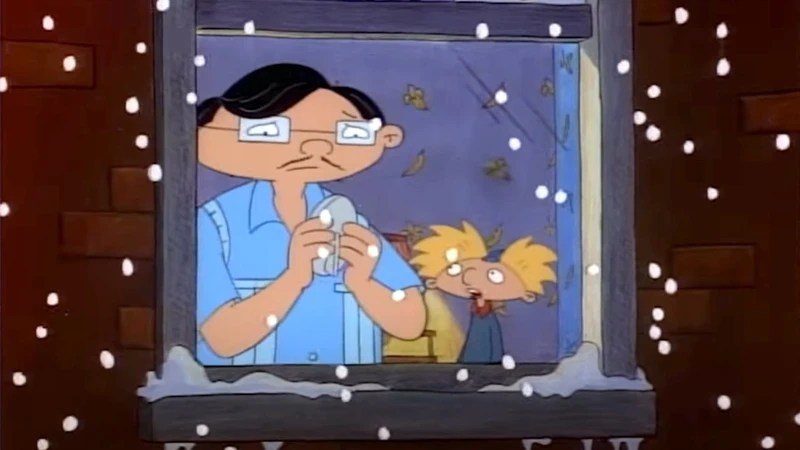
Bartlett: The stories Steve Viksten wrote were always dark as hell, and I thought that was a legitimate take on childhood. I thought Arnold could navigate in a world like that really well, so I was happy to let it go to those dark places.
Ansolabehere: Steve loved the weird characters that were in the boarding house and always wanted to do a story about Mr. Hyunh. He kept pitching this idea: what if Mr. Hyunh has a daughter, and back in Vietnam they were separated. The other thing he kept saying was that he wanted to do a Secret Santa episode.
I met him at this Chinese restaurant one night and he said, “I can’t crack this Secret Santa thing.” So I said, “Okay, here’s a weird idea: What if you do your Vietnam thing here? What if Arnold is trying to find Mr. Hynuh’s daughter?” And I just remember his eyes lit up. He went off and wrote it, and he gave me a co-writing credit, which I don’t deserve. I didn’t write anything on it. But he said to me, “Do you think they’ll let me do that?” And I said, “I don’t know, Steve, but if you did, it would be the first Christmas show that ever cut to Vietnam.”
Bartlett: When we were developing it, I thought, “This would be an unforgettable Christmas show.” The next thing I did was ask Baoan Coleman, who played Mr. Hyunh, because I wouldn’t want to do something that he thought was really off. But I pitched it to him and he said, “Oh, you know what? I was on that roof and I did get helicoptered out of Vietnam.”
Ansolabehere: I think we were all working under this belief that kids were really smart, and they may not have been around when Vietnam was happening, but it’s a big part of history. We always wrote a little bit over the head of the audience. Don’t write things that are crude, but write about things that they don’t quite get, and because they’re smart they’ll figure it out. They’ll realize something, they’ll ask people about it, and it’ll start a conversation.
“You could call the show ‘Hey Helga!’”
You can’t talk about Hey Arnold without mentioning Helga G. Pataki. From her Shakespearean monologues to her complicated home life, she allowed for a wealth of compelling storytelling. To this day, she remains a favorite of both the fans and creators of the show.
Purdy: We quickly realized how brilliant, not only as a voice actress, but as a person that Franny is. It became sort of a fun challenge, like what can we throw at her next?
Bartlett: Her performance as a nine-year-old was unbelievable. We would write these big scenes for her, and she’d study them and then come in and knock them out. And we were like, “This is the goal. This is the coolest character we’ve got.” People often commented that you could call the show, “Hey Helga!”
Ansolabehere: I remember Steve, Craig, and I were all sitting in this room thinking, “We just had Angelica on Rugrats, and we don’t just want to do another bad girl. So, can we come up with a reason why Helga’s bad? What makes her more interesting than just being a bad girl?”
Lisa [Groening, Bartlett’s then-wife] walked through the room and overheard us. She just turned to us and said, “Maybe she’s in love with him.” And she walked out of the room. Craig saw that it was a great idea and started drawing right away. I mean, within minutes, he had a sketch of her closet and that bubble gum statue of Arnold. It was amazing.
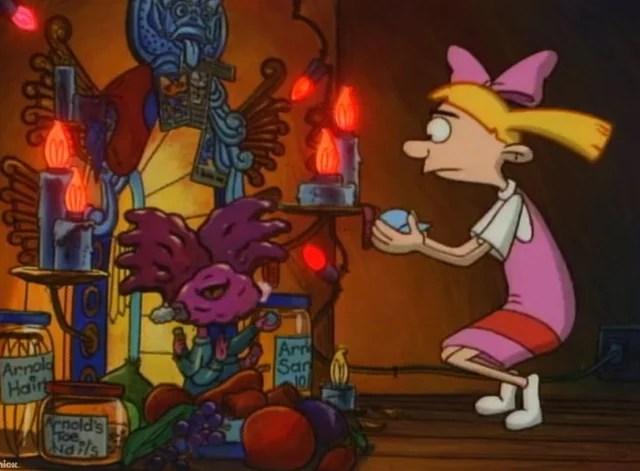
Bartlett: Helga’s unrequited love for Arnold was the very first idea. She’s torturing him because she loves him. And then beyond that, we were like, “Well, why is she such a bully? Why is she so brittle and mean?” How about if her dad is this blowhard beeper salesman? I’ve met adults like that. And what if she has an older sister who’s perfect and we’ll fill the house with Olga’s trophies?
Ansolabehere: Steve always wanted to have an alcoholic character. He always wanted to hint that there was something dark going on in the background. Kath Soucie [voice of Miriam Pataki] got a hold of the material and just gave this beautiful performance without the show ever saying the mom’s an alcoholic. I don’t think Nickelodeon caught onto it. It was enough under the surface, and they weren’t really paying attention.
Shenkarow: I didn’t quite grasp it when I read the episodes. I would get kind of a certain layer, but not necessarily the depth that you would perceive as an adult. There were so many layers to the episodes and the way these characters developed and what they were going through.
Bartlett: I wrote “Helga on the Couch,” and it was really meant to be like a supervillain origin story for Helga. That’s when she meets Arnold, and he sees her and listens to her. He holds an umbrella over her head and compliments what she’s wearing. Nobody had done that for her ever.
I remember when I first pitched it, my exec said, “No, I don’t think it’s a good idea. I don’t want to do an episode about psychology.” They finally let me do it in season four, and I’ve gotten so much feedback from people who talked about seeing that episode and realizing that therapy was not a pariah. They saw Helga and went, “Oh, it’s okay for me to go to therapy. I can get something good out of it.”
“It became an alternative family”
Nickelodeon cancelled Hey Arnold before Bartlett was able to wrap up one the show’s central mysteries: What happened to Arnold’s parents? In 2017, he and Purdy were able to answer the question in Hey Arnold: The Jungle Movie. Plans were also briefly discussed for a new season that never came to fruition.
Purdy: It was always asked by fans when the show became more popular, “What’s going on with the parents?” So there was much discussion amongst us writers about that. In my mind, it seemed too neat just to bring them back and now they’re a happy family. But I think that Craig really felt like he owed it to the show to answer those questions. It was nice because we wrote it with two new writers that grew up watching Hey Arnold. A lot of the animation crew was also in their twenties and thirties, and they grew up on the show.
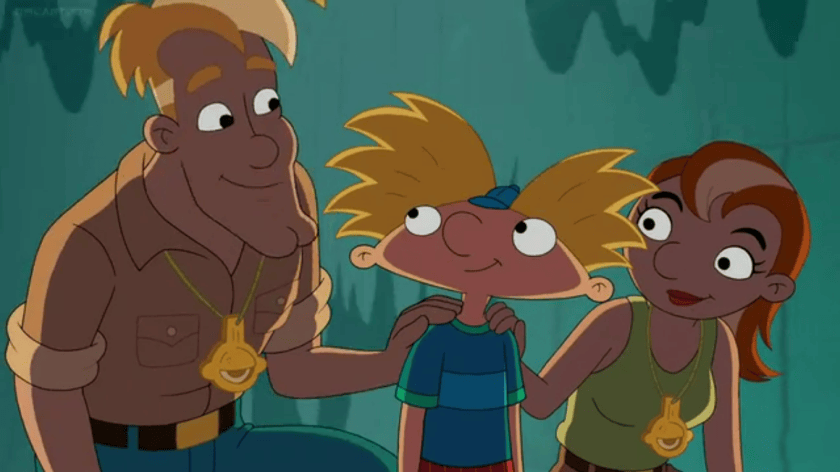
Bartlett: I gave a proposal for season six where they go to sixth grade, and I thought it was made more interesting by Arnold’s parents being home now. They’d been sleeping for ten years, so they’re both a little loopy. Now, they could always be pretending they know what’s going on, but they’re actually trying to catch up. I thought it’d be really funny if Arnold rebelled, too. Like, I’ve had these two good cops with Grandma and Grandpa who let me come and go and do whatever the hell I want. And now you’re trying to tell me what to do. Where have you been?
Not to mention, Helga and Arnold have both declared that they love each other. So, Arnold’s trying to be a couple with her now, but she’s too brittle and self-destructive. I could picture them falling out, getting back, falling out. And both of them could learn things about themselves that they didn’t know.
So, I told Nickelodeon, “Yeah, let’s make more.” And I remember they even asked our producer to put together a budget and schedule, but for whatever reason, they decided not to go through with it. But I still had the great fortune of having closure with the Jungle Movie. So I don’t feel that bad.
Thirty years after the series first aired, the show’s creative team look back at their work proudly and are continually amazed by the show’s lasting legacy.
Lipman: I think we made something that’s still watchable. My kids obviously weren’t born yet during Hey Arnold, but I’ve shown it to them and they think it’s funny. I think that when you do something that’s emotionally authentic and you’re not afraid of giving kids real, heavy emotions along with fun ones, you can make something that stands the test of time.
Purdy: We told stories that we probably wouldn’t have been able to tell anywhere else at that time. The combination of that writers’ room and those artists gave us the opportunity to make not just entertainment, but deep psychological stories that never existed before for kids. There were arguments and there was politics and all that, but it was the most collaborative journey every day, every episode. I’m also really grateful and happy that people still want to talk about it and that these stories resonated with them.
Lang: I think in some cases it became an alternative family for people. It was a place where they went to hang out with all these people who were familiar, in all these situations that looked like the world that they were living in. There were a lot of different characters that people could relate to.
Shenkarow: In many cartoons, a character like Harold would be a one-dimensional bully. But on Hey Arnold, he was three-dimensional. We found out he had a soft spot. He was dealing with insecurities, but he was a very good person and he had a huge heart underneath. I think that really connected with a lot of people.
Bartlett: People have shared so much stuff with me on Instagram that prove without a shadow of a doubt that everything we were trying to do landed with kids. And I couldn’t have known it then. It took me a long time until I had this kind of testimonial that I have now. Now we’re in a world where everybody can comment on everything. I’ve read super heartfelt, really moving messages. It dug so deep for them that people feel like they know the characters in a way that I never could have predicted. ∎